Left 4 Dead 2: Free stuff is good stuff.

Hey all,

Not sure if any of you picked up Left 4 Dead 2 during the holidays when Valve offered it for free in celebration of Christmas, but after playing it for a few days, I must say it’s very good. Sure, it’s not the newest of games (shoutout to 2009!), but free stuff is good in my books.
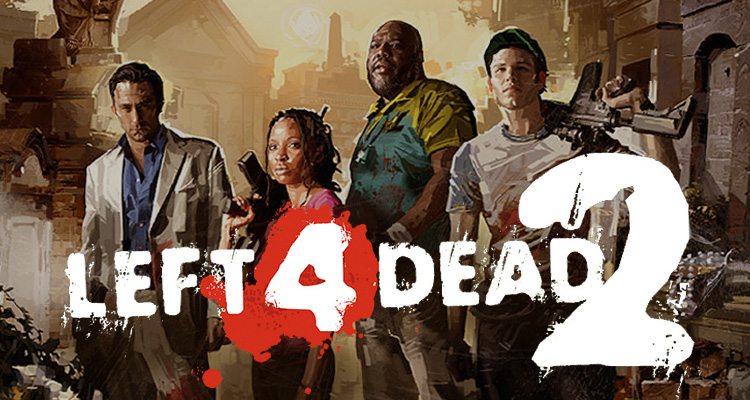
l4d2 blog

To be honest, I never really liked first person shooter games, but I found that L4D2 had a lot of variety whether it was in the mobs or the weapons. I’ve never played the first game in the franchise, but in this continuation, you are given a chance to play one of the four characters on your team that are immune to the disease that turns people into zombies. Depending on which storyline you follow, you will have to progress through several chapters (with a checkpoint after each of them so you don’t have to start all over) until you reach the hardest part of the campaign (which may include working together with teammates to fill a car with gas, fighting off hordes of zombies while waiting for a helicopter, or running across a bridge that is frankly impossibly long).

*Skip this part if you don’t want to read a condensed version of the complete L4D2 storyline*

I’m all about the story and how immersed I am in the game through the writing. Each campaign starts with a short cutscene showing how your team got into your current situation. You are supposed to play the campaigns in a certain order so that the stories flow into one another. The main characters in L4D2 starts you off in the campaign Dead Center, where the four survivors are abandoned on the roof of a hotel. Through the character’s conversations, you find out that your goal is to reach the shopping mall. The fight to the shopping mall is riddled with the undead, but when you make it there, your group finds a race car on display. You must now transverse the mall to find gas to fill up the car. If you succeed, the storyline continues in the next campaign: The Passing. Your team is faced with a raised bridge which you cannot get across. The main characters of L4D2 meets the survivors from the first franchise who tells them they must get the generator working. Collectively, the bridge is lowered and you can continue to drive away. Then in Dark Carnival, your team is forced to abandon your car and travel by foot as the bridge is blocked with abandoned cars. The bridge leads you to a rundown amusement park (this is one of my favourite campaigns) and you all decide to crank up the music on a rock stage so that a patrolloing rescue helicopter can be signalled. It’s pretty cool because the music gets real loud and fireworks on stage explode while you fight zombies. Talk about feeling epic.

All good things must come to an end and in the next campaign Swamp Fever, your team realizes that the pilot who just rescued you is infected and he starts attacking you guys. The helicopter crashes into a swamp in the fight the ensues. The survivors finds signs that there may be rescue deeper in the swamp and indeed, they find that a kind man with a boat named Virgil is willing to take them to a rumoured safe zone in Louisiana. Then comes the campaign I hate the most: Hard Rain. Why do I hate it? It’s raining really hard. I can’t see half the time so it’s really frustrating. But on with the story. Virgil’s boat runs out of fuel so the survivors have to go out and search for more juice. Seems simple enough until signs of a imminent hurricane appear. In the end of the campaign, the survivors retrieve the fuel and signals Virgil with a lit up billboard. Virgil then drops off at the rumoured safe zone and leaves the group to search for more survivors (bless that guy). Sadly, your team finds New Orleans to be completely infested with zombies. However, if you manage to transverse a long bridge, a helicopter is waiting to take your team to a safe zone where the rest of the survivors reside surrounded by water (apparently the infected can’t swim).

***End***

Did I like the writing? Overall, it was alright. The characters interacted well with one another (such as chastising every now and then when a team member accidentally opens friendly fire), and when near death, there is a very real sense of dread in what your characters says. They voice their disbelief, or their acceptance of dying. This causes the player to feel relieved when a teammate heals you or when you find a health pack and the negativity dissipates. The story itself was okay. It may be a bit repetitive in how you finally reach your goal at the end of a campaign only to realize the zombies are always waiting elsewhere but I don’t see any other way a zombie shooter could have written their story.

My favourite part of the writing takes the form of graffiti on the walls and structures in the game. Some are witty, some are funny, while others are sad and unsettling. (Screenshots aren’t mine, but just placed here for reference! I believe the third one is from the first L4D)
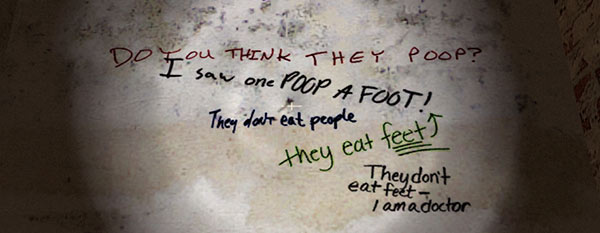
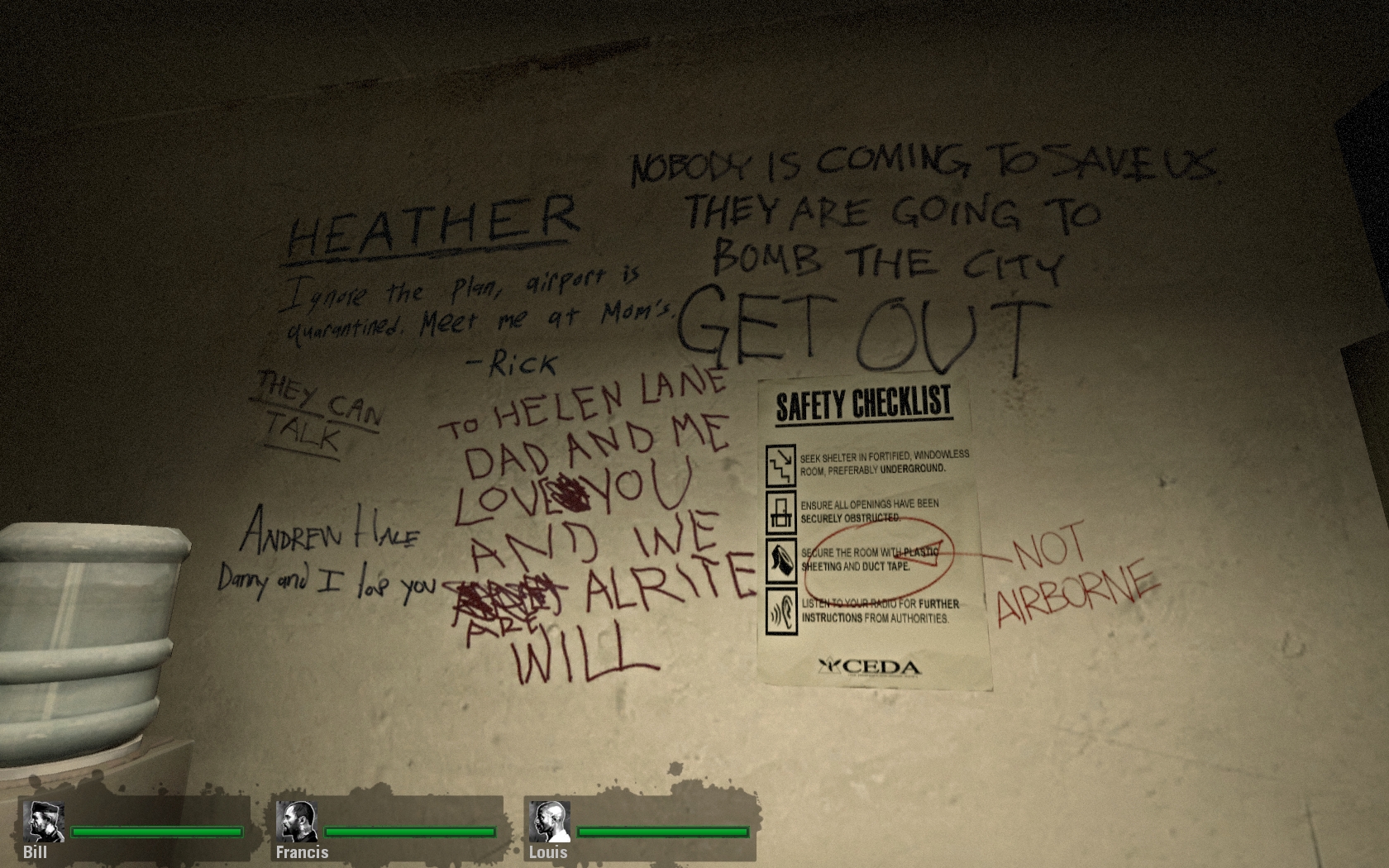
l4d2graffiti1

l4d2graffiti2

I spot my name on one of the graffitis <3 (top right)

I spot my name on one of the graffitis

What other zombie games are there? The storyline similar? Meanwhile, I’ll continue to top the charts in the most friendly fire done in the campaigns in easy mode (sorry whoever I end up playing with 😦 )

-Karen

EXIT Canada

Have you ever played escape the room games? If you haven’t here’s one of the first ones that I played way back then. Excuse the graphics because it is quite old, but if you wanted something better in terms of quality, feel free to just Google up something! There are loads of these games.

Basically, an escape the room games places the player in a room. There is usually a locked door, and using clues around the room, you have to work your way through the room to find a key or a passcode which leads you to your freedom.

I found out from a friend a while ago that in Richmond, they made one of these games…in real life. EXIT Canada.

What does this entail? I went a few days ago with my friends. You get to choose which adventure you would want to experience: a sunken ship, an egyptian one, a prison escape, or a laboratory escape. We chose the sunken ship.

I can’t go into details since that would be giving the game away, but you do have to go through more than one room. The room is not big (which is probably why they only allow parties of 6 people max), but I liked it. It is themed around a ship, and when you walk into the first room, you pick up a piece of paper telling you your backstory.

We had to open several locked boxes and such to get the code for the first room, and that included quite a bit of problem solving. You are allowed two hints and we used it all in the first room. We spent a good chunk of our allotted 45 minutes in that first room, so needless to say, we failed the overall challenge. Time really flies by. However, it was definitely an experience!

It’s not the easiest of places to get to, but once you get to Lansdowne station, it’s about a 15 minutes walk away. If you’re carrying stuff, they have storage cupboards for you to drop off your stuff (it locks, and you keep the key for the duration of your game). The staff is nice, and my overall experience was enjoyable. It costs around $23 a person, and the rate of the game goes up overall as you add more people to your group. I didn’t expect the most amazing theatrical experience, and thought that the rooms were well decorated. You reserve your time slot online, but don’t have to pay till you get there. If you’re looking for something new to do, you can go check out EXIT Canada!

-Karen

“The Hobbit: The Desolation of Smaug”: A Movie Review

Image

Hey everyone,

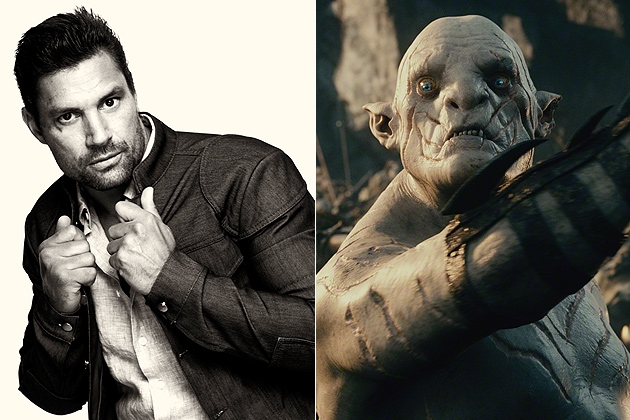
So the advanced screening of the new Hobbit movie was a joy! One of the actors from the movie came to watch the movie with us: Manu Bennett (who plays the leader of the Orcs). He’s from New Zealand and it was pretty cool that he joined us. He talked a bit about how he got cast and how filming was for him.

Manu Bennett: credits to Empireonline.com

Manu Bennett: credits to Empireonline.com

Without further ado, here are my two cents on the movie!

We begin where we left off in the last film, and Thorin and his crew must continue on their way to reclaim the dwarves’ homeland. Early on in the movie, Gandalf leaves the dwarves to go on a short quest of his own. The dwarves brave many obstacles to reach Erebor, and they must also figure out what to do with the dragon that sleeps amidst it.

We get to see Orlando bloom from the original LOTR movies again! Benedict Cumberbatch’s voice is amazing as Smaug. His voice as the necromancer sounds nothing like him, whereas you can really hear his voice in Smaug.

If you’ve read the books (NO SPOILERS SO KEEP READING), I can tell you that that certain plot points were changed. For one, Kili (the hot dwarf) and Tauriel the elf has a romantic subplot. There are others, but I would be spoiling if I said anything more. However, I am super excited for the ending now because I had some issues with how the books ended. Praying to God that things go the way I want with the rest of the movie!

I thought that they cut of the first movie wonderfully. The story arc of escaping from the orcs ended and although we know the movie doesn’t end, we are contented that some sort of conclusion was reached. The Desolation of Smaug’s ending was very unsatisfying. It may have to do with the fact that this movie branched off into a lot of subplots, so there was no good way to sum them up. If that is going to be an issue with you, maybe wait till the last movie comes out?

My final verdict? Great movie, glad they changed stuff from the book, but very unsatisfying in the end.

The movie opens on the 13th of December in Canada! Let me know what you think!

-Karen

How smart can you sound?

What is Twitter?

No, I’m not here to talk about the immensely successful IPO that they did earlier this month. But as a user, what is Twitter?

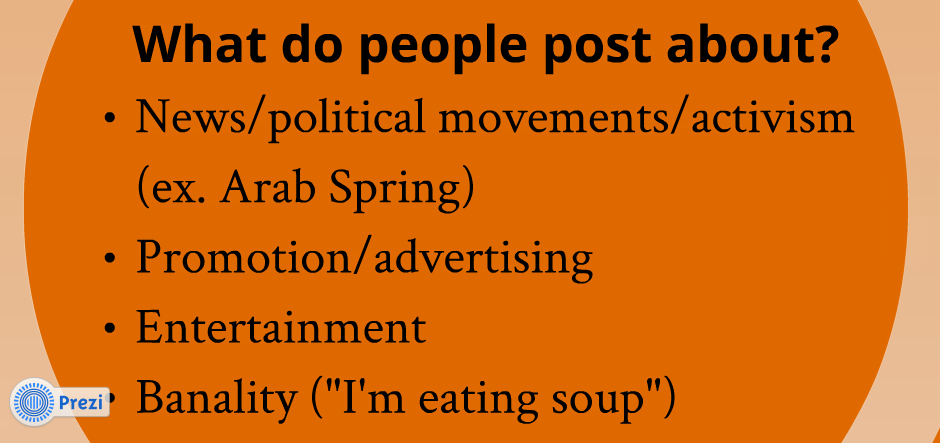
According to my Creative Writing for New Media class, here are the four basic things people tweet about:

Screen Shot 2013-11-26 at 11.20.29 PM

What do I think Twitter is for personal users? Basically, it’s like a test to see how smart you can sound in 140 characters or less. It’s a lot harder than you would think. Which is why my tweets usually go something like this:

Screen Shot 2013-11-26 at 11.17.49 PM

I guess it depends on who your target audience is. For me, it’s a random place for me to say something that I don’t actually expect anyone to read. I don’t have a lot of followers, so I don’t really have to keep a particular audience in mind. I use it to jot down either spasms of enlightenment or thoughts that I feel I must share on public– but not so public that it is on Facebook where people actually know me.

Screen Shot 2013-11-26 at 11.26.03 PM

But if you have really good one-liners in real life, it sounds like you’d make a great Tweeter.

At the same time, I sometimes forget the importance of what those 140 characters can do– and just how public social media can get. Here’s a list of people who got fired over what they tweeted. http://www.businessinsider.com/twitter-fired-2011-5

Of course, aside from personal accounts, there are plenty of good ones out there. You guys ever read @RealCarrotFacts‘ tweets? This account never ceases to make me laugh!
Elliott Holt also did an interesting story through a series of tweets (from different fake accounts), and they can be read here in its compiled form on Storify. It’s like a murder mysteries game.

So how will/do you make your 140 characters mean something?

IMG_12061

– Karen

What is D-BOX? – A Review

Hey everyone,

So I haven’t seen movies for a while because school has been swamping me down, but I did manage to catch Thor : The Dark World with one of my friends over the weekend!

When purchasing our tickets, we realized that aside from the usual IMAX, Ultra AVX and regular showings (3D+regular), there was a new option available: D-BOX.

Doing some initial research, we found out that with D-BOX, your seat moves according to what is happening on the screen. We decided to try it out.

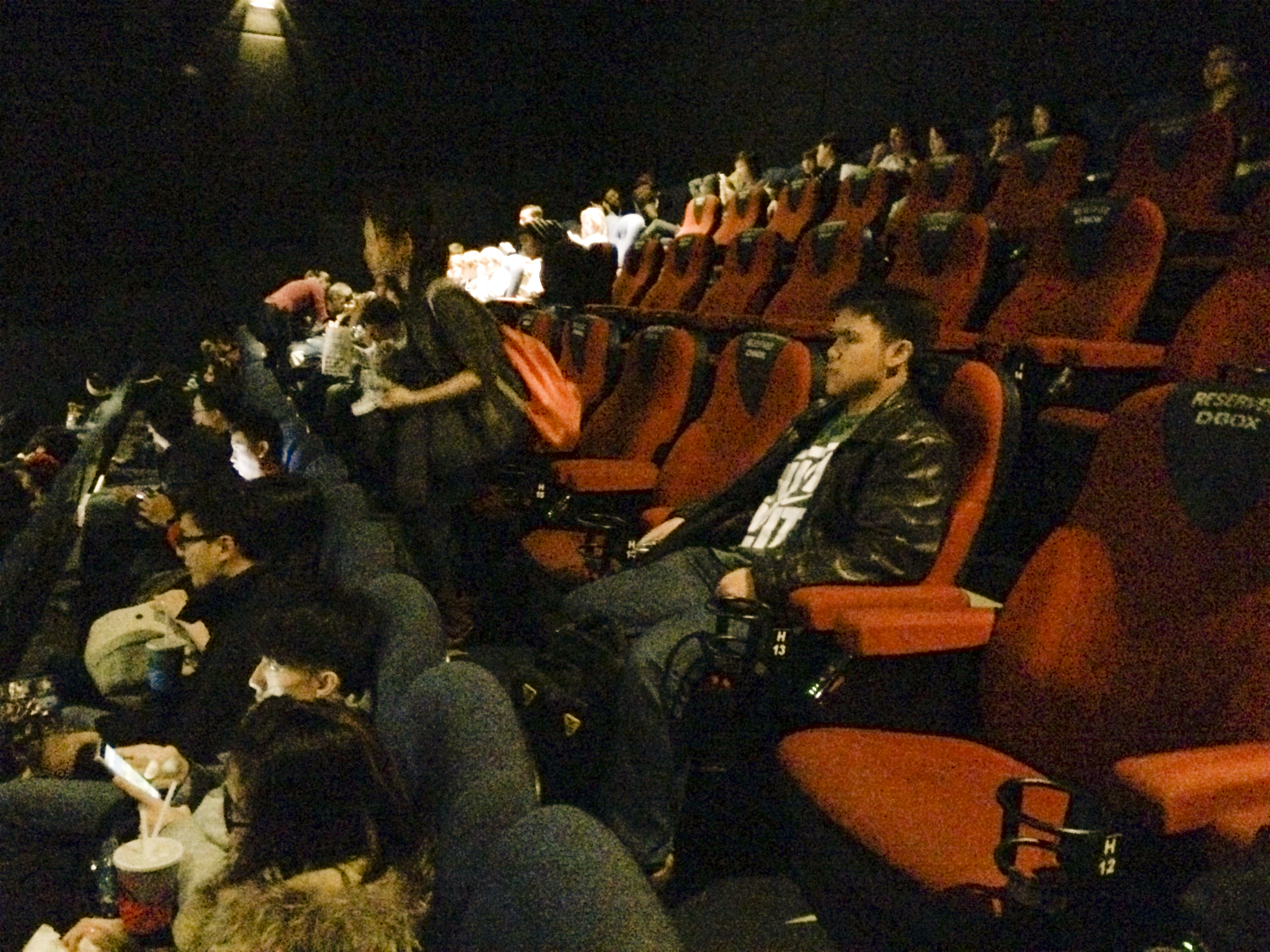
Firstly, if you choose D-BOX, you’re still watching a 3D version of the movie– at least that’s what happened to us. Secondly, we realized the D-BOX seats do not get a theatre to themselves like Ultra AVX films. Instead, we get an area of the regular 3D showing sectioned off for us. These seats are red in colour, and you pre-reserved your seats when you buy your ticket (much like the Ultra AVX films). They reserved some of the prime seats in the house for D-BOX viewers (middle section, closer to the back). When you find your seat, you’ll realize that on your right armrest, you get to select how intense you want your seat movement. These seats are also more comfortable and bigger (they fit less of these seats in the typical row than the regular seats).

Red seats = D-BOX seats; Blue seats = regular seats. All in the same theatre.

Red seats = D-BOX seats; Blue seats = regular seats. All in the same theatre.

Now for the experience bit. 
Firstly, if you get nauseous during 3D movies, I’m pretty sure you won’t be enjoying this. Back when I first started watching movies in 3D, I’d get dizzy, and the same thing happened initially with D-BOX. However, my nausea went away after I got used to the moving seat.

The chair doesn’t only vibrate, but it also lifts you up and down, and forwards and backwards. Now, don’t worry about it just throwing you around. These movements aren’t that intense, but are usually gentle. It’s not like those 4-D rides that make you feel as if you’re actually in a spaceship or whatnot– remember, you’re still in a regular theatre where 80% of the viewers there are watching the film in standard 3D. It’s also pretty quiet, so you don’t really notice the sounds from the chair.

During Thor, we would move along to spaceships that flew across the screen, which was cool. There was also this liquid matter that the screen showed, and our seats gently mimicked the liquid’s floating movement, making you feel as if you were a part of it. There were also scenes where when Thor jumped off a building (not a spoiler, because he can jump anywhere. He’s the God of thunder.), your chair raises you slightly so that you can fall with him off the ledge.

So what did I like about it?
I thought that it was a cool experience. It’s definitely differed from traditional methods of viewing movies, and it does add to the movie. You also don’t need to sacrifice the 3D (if that’s your thing– I like 3D only if it’s made well and the film was actually developed with 3D in mind). Having reserved seating meant that you did not have grab a seat early, and the seats were nice and comfortable since they were bigger.

What did I not like about it?
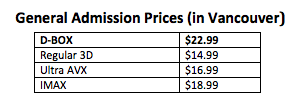
I was a bit nauseous at the beginning, but that eventually went away. There were some unnecessary movements (did we really need vibrations when Thor ran up the stairs? Arguably not.). It also costs more than your regular ticket (made a chart for your reference– Oo! Look at me being all fancy!).

Screen Shot 2013-11-11 at 5.23.08 PM

My friend who went with me also thought it was a good experience. If you’re not sure whether D-BOX is for you, it never hurts to try it. For me, the biggest issue is the cost. I wouldn’t mind having the accompanying chair-guided-movements to movies if it wasn’t for how much more it costs per showing. I guess I would’ve also enjoyed it more if everyone in the theatre had D-BOX seats, but that wasn’t too big of a problem.

For those of you who have tried out D-BOX, what are your thoughts?

-Karen